On February 27, a division bench of the Kerala High Court, comprising Justice Susrutha Arvind Dharmadhikari and Justice PV Balakrishnan, had stayed the interim order of the single judge, which had stayed the release of the film. The Kerala Story 2: Goes Beyond For 15 days.
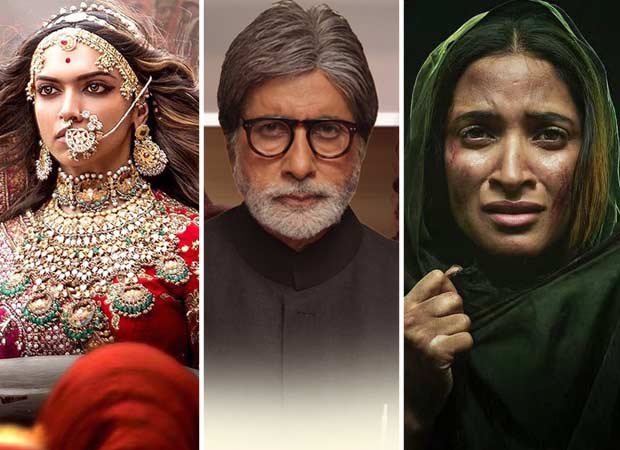
Revealed: Kerala High Court cites Padmaavat, reservation verdict to clear release of The Kerala Story 2: Goes Beyond
The single judge had relied on certain excerpts from the film’s teaser to conclude that the content prima facie had the potential to disturb communal harmony and that the Central Board of Film Certification (CBFC) would not have adequately applied its mind under Section 5B of the Cinematograph Act, 1952. However, the appellate bench emphasized an important constitutional principle: once the CBFC, a statutory expert body, has granted certification to the film after viewing it in its entirety, the courts should do the same. Generally, proper use of brain is assumed.
In reaching this conclusion, the Bench took considerable inspiration from two historical precedents of the Supreme Court. First, in Prakash Jha Productions v. Union of India, decided in 2011 in the context of the film ReservationThe Supreme Court said that once a film is certified by the CBFC, states cannot suspend or ban its screening merely on the basis of apprehension of law and order problems. The Court made it clear that maintaining public order is the responsibility of the State and not a ground to curtail certified expression.
Second, the bench relied on Viacom18 Media Pvt. Ltd. Ltd. v. Union of India, 2018 judgment relating to the film Padmavat. In that case, the Supreme Court confirmed that creative material is protected under Article 19(1)(a) of the Constitution. Once certification is granted, the presumption remains that statutory guidelines relating to public order and communal harmony have been duly considered. The State cannot stop the exhibition in advance on the basis of betting.
The Kerala High Court said that the petitioners had not watched the film in its entirety and were relying only on the teaser clipping. It further found that the manufacturer had incorporated the modifications directed by the CBFC, strengthening the presumption of due diligence. Therefore, on the basis of selected excerpts alone, the conclusion of non-use of mind cannot be sustained.
In the case Viacom18 Media Private Limited and Others vs. Union of India and Others ((2018) 1 SCC 761), the Supreme Court of India struck down the state-imposed ban on the film (Gujarat, Rajasthan, etc.). Padmavat Maintaining freedom of expression. The court ruled that states cannot ban a film already certified by the CBFC, as maintaining law and order is the responsibility of the state and not a ground to curtail film screening.
Meanwhile, M/s Prakash Jha Productions and Others vs. Union of India and Others (2011) 8 SCC 372 is a landmark Supreme Court case, which confirmed that state governments cannot ban films already certified by the Central Board of Film Certification (CBFC). The court held that once approved, the screening of a film cannot be stopped because of imaginary public disturbance, strengthening the freedom of expression.