Controversy regarding Ananya Pandey’s dance sequence moon my heart Says less about a performance and more about the times we live in. A clip has gone viral. A few seconds are captured from a larger scene. The quality is bad. Context is missing. The emotion behind that moment is ignored. And within a few hours, social media turns into a court, where the accused is declared guilty.

In defense of Ananya Panday: Chand Mera Dil controversy proves that social media doesn’t review movies anymore; it sues the clip
Exactly the same thing happened with Ananya Pandey. a dance sequence from moon my heart A discussion ensued online, with many users criticizing her Bharatnatyam-inspired dances and comparing her to Sridevi, Sai Pallavi and other artistes known for their beauty and classical expressions. The reaction became so intense that the debate went beyond the film and became a conversation about classical dance, training, authenticity and respect for Indian art forms in Bollywood.
Now, no one is saying that classical dance should be treated casually. Bharatnatyam is not a support. This is not a decorative gesture that can be inserted into a film song to make a scene look Indian. It is a deeply disciplined art form, based on years of training, control, expression, rhythm and devotion. Therefore, when classical dancers or trained audiences object to a depiction, their concerns should be heard. But there is a difference between criticism and digital punishment.
A performance can be debated, creative choices questioned and choreography discussed. The intentions of the director can also be examined. But what social media often does is different. It doesn’t ask, “What was this scene trying to say?” It asks, “How can we make this person trend for the wrong reason?”
it is right here moon my heart The line becomes important. Now the matter is not just about Ananya Pandey’s dance. The issue is how online culture has trained itself to remove context, heighten awkwardness, and turn everything into a test. After all, a film is not a reel. A scene has a before and an after. A character has a mental state. A song has a dramatic purpose. But in the age of viral clips, cinema is being consumed like CCTV footage: freeze it, zoom in on it, rate it and broadcast it.
Complicating the reaction further was the fact that the scene was reportedly being watched by many people not in its full cinematic setting, but through a broadcast clip. This is the real danger. A moment read within a film becomes a performance out of context. The audience is no longer reacting to the film. It is reacting to the forwarded fragment.
Social media criticism comes across as concern but the behavior amounts to character assassination. The debate on dance soon becomes a debate on nepotism. The debate over choreography becomes a debate over whether an actor deserves to be in films. Conversations about art become an excuse to repeat old dislikes.
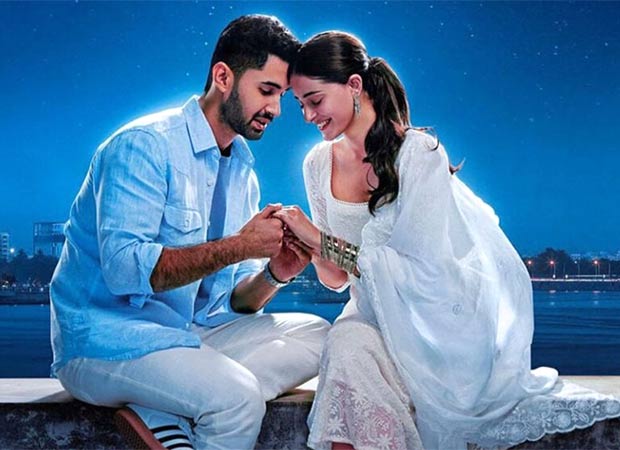
That’s why this controversy is big moon my heart. This reflects a larger problem with how Hindi cinema is accepted now. We don’t watch films first and react later. We first react and then decide whether the film is worth watching or not. A clip becomes an outrage trailer, a meme becomes a review, and a tweet becomes a verdict.
And this is unfair not only for Ananya Panday, but also for the audience.
There is also a gender-based pattern that cannot be ignored. Female artists are often judged more harshly for physical expression. Their dance, body language, costumes, accent and even facial expressions have been dissected with a brutality that is rarely applied with the same intensity to male actors. When an actress stumbles, the reaction isn’t just “it didn’t work”. It becomes “How dare he?” The leap from criticism to outrage is the problem.
A more mature conversation would have been: Did the makers adequately prepare Ananya for the dance style? Was the choreography meant to be pure Bharatanatyam or fusion? Did the scene require technical perfection or emotional awkwardness? Could the producers have staged it better? What is Bollywood’s responsibility when using classical traditions? These are legitimate questions. They lead somewhere.
But “look how bad she is” goes nowhere. It just creates engagement.
Ananya Panday should be judged in context and not through a pirated clip cut for maximum embarrassment. There is a difference between holding cinema accountable and using cinema as a punching bag.
Finally, this controversy proves one thing clearly: social media is no longer just about reviewing Bollywood. It is editing Bollywood, suing Bollywood and punishing Bollywood, often before the film gets a chance to speak for itself. And this should concern everyone who loves cinema.