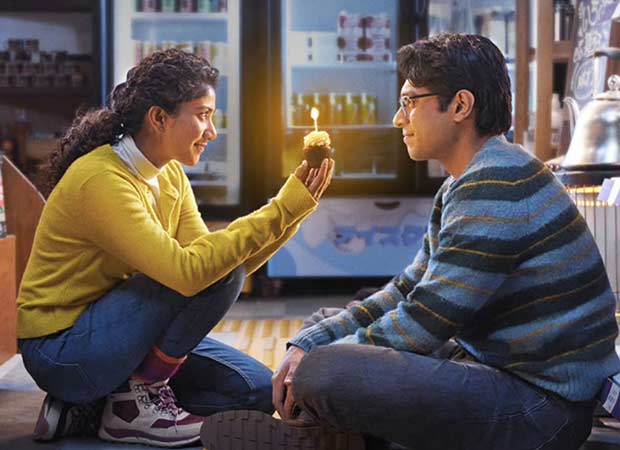
On April 11, it came to light that its advance booking had been done. one dayThe film starring Junaid Khan and Sai Pallavi had a great opening 39 days before its release. The rollout wasn’t nationwide in the traditional sense, but it was visible enough to fuel buzz: Bookings were live in about 20 cities, with only one show per cinema open so far. This is not standard Hindi-film release behavior. This is a strategy designed to create headlines before the decision on the film is made.

The gamble of booking a day 39 days in advance shows Bollywood is rewriting the release playbook
And this is exactly why one day matters beyond one day.
This isn’t just about a movie attempting something unusual. It’s about a Hindi film industry that is afraid of letting a film arrive quietly, breathe naturally and gain its stature with time. Today, attention is treated like inventory: rare, unstable, and always at risk. The result is an industry that wants to sell value before the public can actually decide whether the film is worth it or not. One release is no longer enough. It must now be dressed up as an event, signaled as an event, and marketed as an event, weeks before it is proven that it is an event.
This is where the frustration is visible.
Starting ticket sales 39 days in advance is not just a booking decision. This is a psychological operation. This tells the business that something unusual is happening. This tells the audience that this film should not be treated like a typical Friday title. This says to start watching the market early. In other words, the strategy is not just about selling seats. It’s about selling importance. In a healthy theatrical ecosystem, value will emerge from music, trailer recalls, cast pulls, reviews, word-of-mouth or the mood of the public. In a neural ecosystem, importance must be engineered in advance.
None of this automatically makes this move unwise. In fact, one could argue that this is wise. In the age of fragmented attention, why should producers passively wait for the final week? Why not generate curiosity early, test the market response, build city-wise conversation and turn the film’s release into a slow-burn conversation rather than a last-minute flurry? Those are fair questions.
The industry is operating in an environment where perception often precedes performance. The buzz at the box office starts even before Friday morning. Judgments come on social media even before the first show is over. Narratives about buzz, acceptance, urban appeal, rampant alienation, or astonishingly poor performance have been assembled at an alarming pace. In such an environment, early booking becomes another weapon in the perception war. It is no longer just distribution. This is image building. The message is simple: watch here first, so that by the time the film actually comes out, it already has an aura of public interest.
And in today’s Bollywood, aura is half the battle.
what makes one day The gait especially reveals its restraint. Only one show per cinema has been opened in most places. This means that it is not a cruel attempt to flood the market. It is a calibrated attempt to create a signal. Signal matters more than initial volume. The industry understands that even limited initial activity can generate buzz, screenshots, curiosity and business headlines. In that sense, the booking window is acting less like a consumer convenience and more like a media device.
That’s why the big thing is not whether one day Sells a few hundred or a few thousand initial tickets. The big thing is that Bollywood wants to move forward rapidly. It wants audiences to feel that a film actually matters before they even see it. It seeks to reduce uncertainty by creating inevitability. But cinema history rarely rewards that tendency forever. A film can be advertised as an event, ticketed as an event, and discussed as an event. Yet if the viewer does not emotionally experience it as an event, the illusion breaks down very quickly.
Theaters do not open early because times have changed. They open up quickly because there is confidence.
And perhaps this is where the Hindi film industry finds itself in 2026: not short of ambition, not short of ideas, but sorely lacking patience. one day Still this bold step may be justified. He may also benefit from this. But the bigger truth is this: When booking for a film starts 39 days in advance, Bollywood is not just selling tickets. This goes to show how important it has become to grab attention quickly.